AMA Whitepapers on Leadership, Management, and AI in the Workplace
Browse AMA's library of research-backed Whitepapers on artificial intelligence in the workplace, leadership development, management skills and workplace communication, drawing on AMA's annual surveys of corporate professionals and decades of leadership research.
- Trusted by business leaders for more than 100 years
- Research from 1,000+ professionals per study
- Expert analysis from AMA
- Complimentary downloads
Enhance your competitive advantage with these free Whitepapers detailing AMA's original research, annual workforce surveys and industry trends. Authored by respected thought leaders, consultants and other experts, AMA's Whitepapers bring reliable, evidence-based perspectives on the AI, management, leadership and communication challenges that affect your organization and career success.

AI
AI Becomes a Daily Workplace Tool with Employees Trying to Stay Ahead
AI has moved from experimentation to everyday use, but employees and leaders are experiencing the shift very differently. AMA’s 2025 survey of 1,365 professionals reveals rapid growth in daily AI use, stalled governance, rising independent adoption and widening confidence gaps.
Download Whitepaper

Talent Development
Ambitious Employees. Underprepared Managers. A Growing Organizational Risk.
Employees today are ambitious and eager to build new skills, but many are not receiving the development opportunities they need to thrive. AMA’s 2026 Talent Development Research Study, based on responses from more than 1,000 global professionals, reveals a growing gap between employee motivation and organizational readiness.
Download Whitepaper

Management
The New Management Reality: AI, Engagement and the Invisible Work of Managers
Managers are working harder than ever, but employees may not see it. AMA’s 2026 Management Research Study, based on responses from more than 1,000 global professionals, reveals a persistent gap between how managers perceive their own engagement and how employees experience it. As AI reshapes decision making, delegation and productivity expectations, managers are spending more time on increasingly invisible cognitive work.
Download Whitepaper

AI in the Workplace Whitepapers
AMA's Whitepapers on AI in the workplace examine how organizations are adopting artificial intelligence, where employees and leaders are aligned (or not), and what governance, training and change-management practices separate effective AI rollouts from stalled ones. These reports draw on AMA's annual workforce surveys and supplement AMA's AI training and development programs.

AI Research
AMA's Annual AI Survey: Organizations Make Progress Adopting AI, but Many Employees Feel Left Behind
Explore AMA's research into how organizations and individuals are currently navigating AI adoption, confidence, support and workplace readiness.
Download Whitepaper

AI Research
Artificial Intelligence Is Booming, but Companies Are Not Ready
AMA surveyed business professionals to learn how organizations are positioned for AI and where companies still need to catch up.
Download Whitepaper
Management Skills Whitepapers
AMA's management Whitepapers cover what separates effective managers from struggling ones, the gap between manager and employee perceptions, and the specific skills that drive performance at every level of an organization. These reports inform AMA's management and supervisory skills training and provide benchmarks for evaluating internal manager development programs.

Management
The Manager-Employee Disconnect On Engagement and Effectiveness
AMA research highlights gaps between how managers and employees view priorities, engagement, communication and workplace challenges.
Download Whitepaper

Management
AMA Survey: Employees Value Training, but Many Feel Overlooked
AMA's survey of more than 1,100 people worldwide reveals key insights into today's learning and development landscape.
Download Whitepaper

Management
Why Managers Are Failing to Execute Strategy, and How Organizations Can Help
AMA research shows why managers need better support to execute strategy and help organizations meet critical business goals.
Download Whitepaper
Leadership Skills Whitepapers
AMA's leadership whitepapers translate decades of leadership research and AMA's annual surveys of corporate professionals into practical guidance for developing leaders at every level. Each report identifies a specific leadership challenge, draws on AMA's research data, and connects to AMA's broader leadership development curriculum.

Leadership
Leadership Development in a Transforming Workplace
AMA surveyed 1,249 professionals to uncover leadership gaps, what high-performing organizations do differently and how to build stronger leadership capacity.
Download Whitepaper

Leadership
Creating an Engaged and Equitable Workforce Is Everyone's Responsibility
This report explores how eliminating engagement disparities can benefit the entire organization and how leaders can support change at every level.
Download Whitepaper

Leadership
Developing Skills for the Modern Workplace
While flexibility has increased, so has the need for specific skills to support the new ways of working. It’s not enough to only provide mandatory compliance training and industry-specific skills. Managers and individual employees also need adaptable, technology-focused, resilience-building and key people skills that help them succeed with new responsibilities in their changing work environments.
Download Whitepaper
Talent Development Whitepapers
AMA's Talent Development Whitepapers explores how organizations can identify skills gaps, strengthen employee capabilities and prepare their workforce for evolving business needs. These reports offer research-based insights that support AMA's employee training and development programs and help organization improve their talent development strategies.
Talent Development
AMA Survey: Employees Value Training, but Many Feel Overlooked
AMA's survey of more than 1,100 people worldwide reveals key insights into today's learning and development landscape.
Download Whitepaper

Talent Development
How Hybrid Work Affects Career Advancement with Disparities Based on Gender and Age
AMA surveyed 1,000 U.S. knowledge workers to explore how hybrid and remote work affect office culture, advancement and workplace dynamics.
Download Whitepaper

Talent Development
Workplace Engagement: Fixing "The Broken Rung" Requires Engagement at Every Level
AMA's survey reveals key findings about workplace engagement and why professionals need connection to sustain performance and interest in their work.
Download Whitepaper
Communication Skills Whitepapers
Communication is the through-line in nearly every leadership and management challenge AMA's research surfaces. These Whitepapers address the specific communication skills that build credibility, drive alignment and create high-trust workplaces, and they support AMA's communication skills training.

Communication
The Essential Guide to Communicating with Tact & Credibility
The best idea is worth nothing if others cannot hear it. Success at work depends largely on how well you communicate.
Download Whitepaper

Communication
Improving Your Communication Skills: AMA's Essential Guide for Business Leaders
Your ability to communicate and connect with others is critical to getting results and helping your business thrive.
Download Whitepaper

Communication
6 Simple Steps to Killer Presentations
Command attention and confidently present your ideas with poise and control. Whether it’s presentations at work or public speeches, learning how to create compelling, persuasive presentations (and get past the jitters) is a powerful way to demonstrate your leadership potential.
Download Whitepaper
Management
Management Styles: Are You the Manager You Think You Are?
AMA surveyed more than 1,000 managers and staff members to examine how management styles are understood and used.
Download Whitepaper
Management
5 Skills Every Virtual Manager Needs to Succeed
Virtual managers need specific skills to help others succeed, develop and meet organizational goals without being face to face.
Download Whitepaper
Management
The Case for AMA Management Certification
Research suggests there is a major opportunity to improve manager effectiveness and the impact managers make on business.
Download Whitepaper
Leadership
The Future of Corporate Culture: What's Changed and Why It Matters
Corporate culture affects daily operations, employee retention, engagement and productivity. This Whitepaper explores why it matters now.
Download Whitepaper
Leadership
Innovation: A Critical Necessity
AMA surveyed nearly 6,000 global business professionals to uncover practical strategies for maximizing innovative potential.
Download Whitepaper
Leadership
New Skills for the New Workplace
AMA surveyed professionals on how changing business demands have impacted their jobs and what new skills are needed in today's workplace.
Download Whitepaper
Leadership
Workplace Strategies for the Road to Recovery
Professionals have had to adapt to new work environments, shifting goals and changing skill demands. This Whitepaper explores strategies for moving forward.
Download Whitepaper
Leadership
5 Ways Leaders Get Results
To lead well, one must communicate well.
Download Whitepaper
Talent Development
Meeting Critical Employee Needs to Re-Engage and Retain Today's Workforce
Explore how work, technology and employee expectations have changed retention and engagement.
Download Whitepaper
Talent Development
Success Skills for the Digital Age
In a worldwide study of 11,624 employees, AMA examined the confidence these employees have in specific areas of knowledge, skills and experience that are critical for business success in the digital age.
Download Whitepaper
Talent Development
Do You Set the Bar? How Executives Are Defining HiPo
What is the number one characteristic you look for when identifying high potential (HiPo) talent?
Download Whitepaper
Talent Development
AMA Research Striving for Excellence: Mastering the Skills That Drive Performance
AMA surveyed over 2,000 professionals across more than 20 industries to examine the skills that drive performance.
Download Whitepaper
Talent Development
The Four Critical Abilities
A fresh look at the skill gaps of employees at all levels of organizations.
Download Whitepaper
Project Management
5 Simple Steps to Successful Project Management
Project managers need technical, communication, influence and conflict-resolution skills to keep work moving.
Download Whitepaper
Business Enhancement
The Future of Higher Education
Learn five strategies schools are using to help students enhance employability, transition into careers and thrive in business.
Download Whitepaper
Business Enhancement
Beyond Diversity & Inclusion: Lead Meaningful Change in Your Organization
Organizations need to move beyond check-the-box policies to lead more meaningful and lasting change.
Download Whitepaper
Stay Current on the Latest Workplace Trends
Sign up to receive AMA eNewsletters, the latest insights, research, resources and special offers.
Sign Up Now
Explore More AMA Resources
AMA offers you countless ways to not just learn new skills—but to reinforce them. Explore the latest trends so you can improve your competitive edge. We’ve curated a wealth of complimentary resources including articles, videos, quizzes and more—on hundreds of subjects from must-have skills like management and communication, to more specialized topics such as cornerstones of trust and culture adjustment. Discover them today!
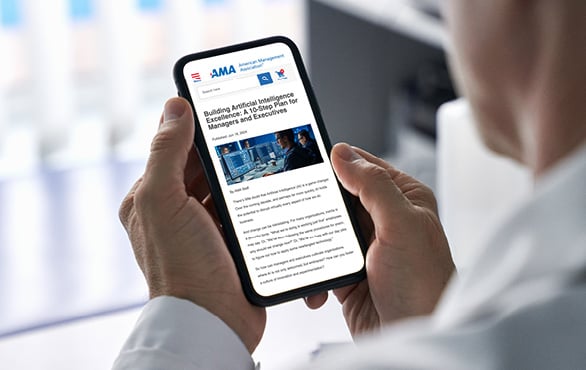
Articles
Find insights and thought leadership from recognized authorities on relevant subjects like management styles, persuasion tactics and beyond.
View More Articles
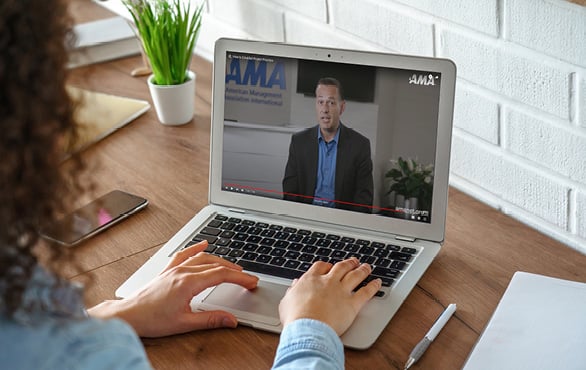
Videos: Ask the Experts Video Series
Meet AMA’s world-class faculty as they share expert advice on everyday challenges like managing conflict and avoiding project failures.
Watch Now

Quizzes
Quickly assess your knowledge in a variety of essential subject areas like delegation, coaching, and time management with our easy quizzes.
Take Our Quizzes

Exercise Guides
Expand and practice skills in areas like managing the unknown and constructive change—using interactive worksheets, guides and templates.
View All Exercise Guides

Infographics
Take a more visual approach to learning with engaging graphic explorations of topics like active listening, difficult conversations, and business writing.
View All Infographics
Frequently Asked Questions About AMA Whitepapers
What is an AMA Whitepaper?
An AMA Whitepaper is a research-backed report published by the American Management Association on a specific workplace topic, such as artificial intelligence adoption, leadership development, management effectiveness, or workplace communication. Most AMA Whitepapers draw on the organization's annual surveys of corporate professionals and are written by AMA researchers, contributing experts, and industry thought leaders. AMA Whitepapers are free to read and download.
Are AMA Whitepapers free?
Yes. AMA whitepapers are free to read and download. Some whitepapers may ask for a name and email address before downloading; access itself is not paid. AMA's Whitepapers are intended to support managers, leaders, and learning and development professionals in making informed decisions about workplace strategy, training investments, and people development.
What topics do AMA Whitepapers cover?
AMA's Whitepaper library covers four main topic areas: artificial intelligence in the workplace, management and supervisory skills, leadership development, and workplace communication. Specific reports include AMA's annual AI survey, research on the manager-employee disconnect, studies of strategy execution, and guides on key skills such as presentation effectiveness, virtual leadership, and conflict resolution. New whitepapers are added regularly as AMA completes new research.
How recent is the research in AMA Whitepapers?
AMA publishes new whitepapers throughout the year, including findings from its annual workforce and AI surveys. The most recent report is AMA's 2025 AI Survey, which surveyed 1,365 corporate professionals on their daily use of artificial intelligence at work. Each whitepaper page indicates when the research was conducted, and older reports are kept available because the underlying skills research (on leadership, management, and communication) remains relevant year over year.
Who writes AMA Whitepapers?
AMA Whitepapers are written by AMA's internal research team, AMA faculty and instructors, contributing industry consultants, and external thought leaders with deep expertise in the topic at hand. Survey-based whitepapers, such as AMA's annual AI Survey, are produced by AMA's research staff and are based on responses from corporate professionals across industries.