Knowledge and tools to help you achieve your goals
AMA has identified four essential skill areas that a wide range of organizations recognize as crucial to employee development. Explore each of these in detail as well as resources AMA offers to help you develop and improve them.
Key Business Skills

Leadership
Leaders drive strategy, innovation, and much more. Explore seven key leadership skills plus additional resources.
Learn More

Strategic Planning
Discover strategic planning process steps and other key information necessary to create and implement strategy.
Learn More

Interpersonal Skills
These vital “people skills” are essential for effective interactions. Explore types of interpersonal skills and how to improve them.
Learn More

Human Resource
HR professionals are integral to a company’s strategic goals and objectives. Learn about top skills HR professionals need.
Learn More

Free Seminar Previews
These complimentary 30-minute programs are an ideal way to understand what’s included in the carefully developed, curated
content found in our multi-day best-selling courses. They also highlight specific features of AMA’s immersive, highly interactive
approach to instructor-led training and why it is so impactful.

Management Skills for New Managers
Explore how this top course can help you successfully undertake the duties and challenges of leading employees.
View Now

How to Communicate with Diplomacy, Tact & Credibility
Learn about communication style differences and how to flex them, and discover how the full course experience helps you build on these capabilities.
View Now

Improving Your Project Management Skills: The Basics for Success
Discover specially selected course content based on project management methodology, and the tools and techniques covered in the full-length seminar.
View Now

Women’s Leadership Certificate Program
Explore how this leading program helps participants craft their own leadership message, deal with organizational politics, and much more.
View Now
Key Business Skills and Resources by Role
To excel in performance and achieve desired results, a variety of skills are necessary throughout your career, depending on role, level of experience, responsibilities, and changing expectations. AMA has curated resources to help you meet these needs whether you’re a manager, executive, project manager, or working in other key areas. Explore expert insights, instructor-led courses and more for the professional roles listed below.

New Managers
Discover insights, strategies, and expert-led programs to help you gain the confidence and expertise to lead and motivate others.
Learn More

CEOs and Managing Directors
Leverage AMA’s resources for executives and senior managers to improve key areas of your business such as change management, innovation, strategy, and more.
Learn More

Project Managers
Gain crucial insights into multiple aspects of PM such as forecasting, risk management, project scheduling—plus powerful courses to expand your knowledge.
Learn More

HR/Training Directors
Learn essential components of effective corporate training and how to foster a culture of learning, as well as relevant high-impact AMA programs.
Learn More

For Non-Supervisory Employees
Get ahead in your career by taking ownership of your professional development. Explore essential competencies and powerful resources to get started.
Learn More
Sign up for eNewsletters
Keep up-to-date on the latest content from American Management Association and specials offers.
Sign up Now
Explore More Resources
AMA offers you countless ways to not just learn new skills—but to reinforce them. Explore the latest trends so you can
improve your competitive edge. We’ve curated a wealth of complimentary resources including articles, videos, quizzes, and
more—on hundreds of subjects from must-have skills like management and communication, to more specialized topics such
as cornerstones of trust and culture adjustment. Discover them today!
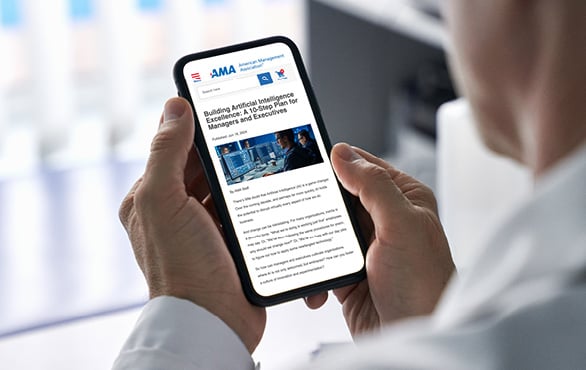
Articles
Find insights and thought leadership from recognized authorities on relevant subjects like management styles, persuasion tactics, and beyond.
View More Articles

Videos: Ask the Experts Video Series
Meet AMA’s world-class faculty as they share expert advice on everyday challenges like managing conflict and avoiding project failures.
Watch Now

Whitepapers
Explore research-based dissertations and commentary about timely subjects such as innovation, artificial intelligence, and hybrid work.
Download Whitepapers

Quizzes
Quickly assess your knowledge in a variety of essential subject areas like delegation, coaching, and time management with our easy quizzes.
Take Our Quizzes

Exercise Guides
Expand and practice skills in areas like managing the unknown and constructive change—using interactive worksheets, guides, and templates.
View All Excersie Guide

Infographics
Take a more visual approach to learning with engaging graphic explorations of topics like active listening, difficult conversations, and business writing.
View All Infographics
Explore Courses for Career Success
AMA offers 160+ instructor-led seminars and workshops in 16+ subject areas. Build the essential professional skills
organizations need for outstanding performance and productivity. Learn live online through our e-learning platform or in
person, guided by our expert course leaders. Interact with peers across industries and practice applying what you learn
through hands-on exercises, real-world activities, relevant case studies, and collaborative breakout sessions. You'll gain new
perspectives, brainstorm solutions to common workplace challenges, and receive expert feedback in a supportive learning
environment.

Management & Supervisory Skills
Lead your team with credibility and confidence by building skills that help you effectively motivate, coach, communicate, and improve individual and team performance.
View Management Courses

Top 40 Seminars
Manage tough challenges with the powerful skills our customers choose most—from leadership and management to communication and project management, and more.
View AMA Top 40

Artificial Intelligence (AI) Courses
AI has world-changing implications, presenting both risks and opportunities. Explore our AI courses and learning resources to help ensure your continued success.
View AI Courses